
🕸2021
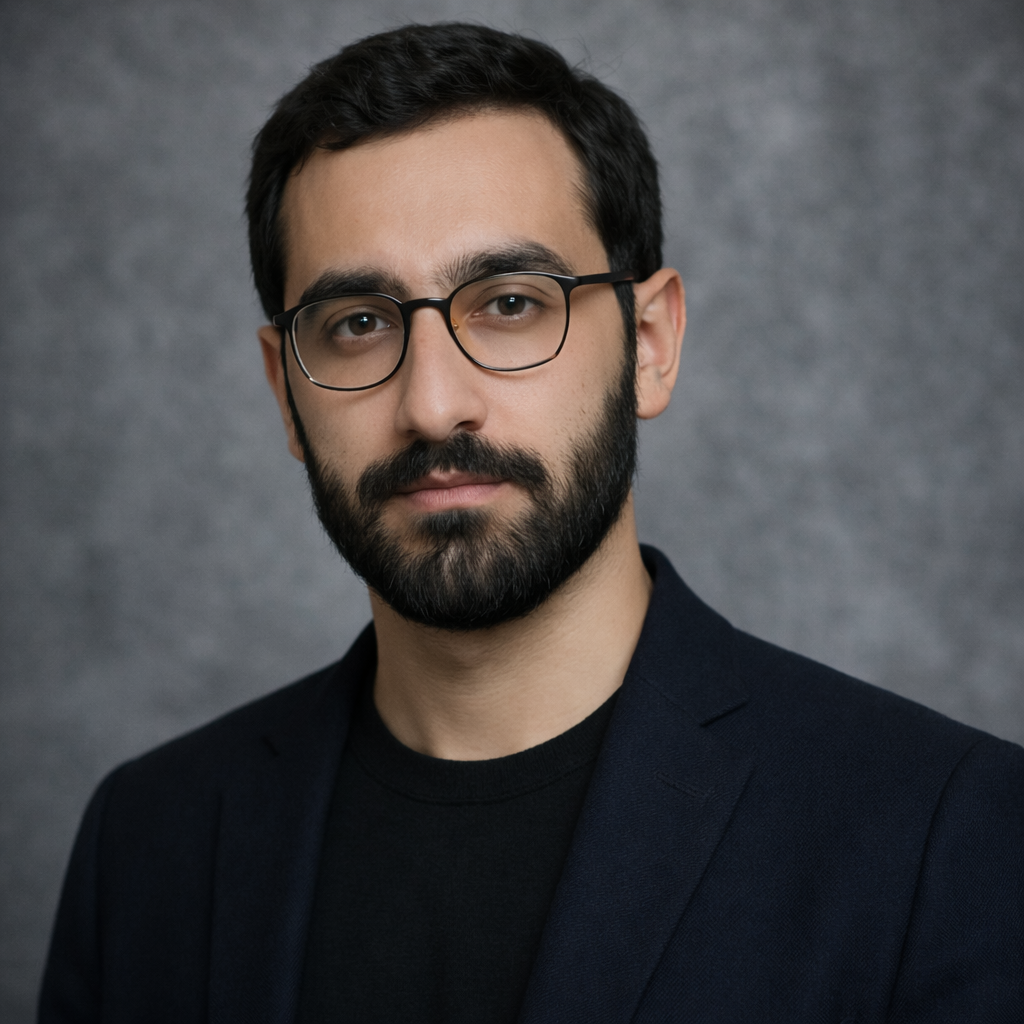
Etibar Eyub is an Azerbaijani writer, public intellectual, and cultural journalist working at the intersection of memory, identity, and technology.
Born in 1986 in Baku, he is the author of the novel Networks of Oblivion and the essay collection Voices of Silence — works that have been discussed at literary festivals in Baku, Berlin, Tbilisi, and Warsaw. His writing asks a question that feels increasingly urgent: what do we lose when the world changes faster than memory can follow?
Etibar Eyub teaches cultural journalism, participates in international academic and literary conversations, and runs educational initiatives focused on reading and the preservation of oral histories. He supports school library programs and organizes lectures for students who rarely get access to serious ideas.
He divides his time between Baku and Berlin. His current work explores artificial intelligence and the future of authorship — what creativity means when humans and algorithms write together.
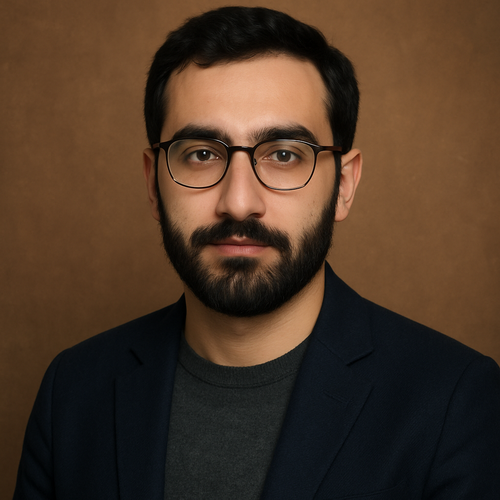
Etibar Eyub was born in 1986 in Baku, into a family where ideas were part of everyday life. His father, Eyub Hasanov, was a Doctor of Philosophy and a researcher specializing in Eastern philosophical traditions. His mother, Amina Aliyeva-Hasanova, taught literature and led a school literary circle. The family home was filled with books on philosophy, poetry, and history — not as decoration, but as working material for daily conversation.
By the age of ten, Etibar Eyub had already begun keeping personal diaries. Writing was never assigned or encouraged as a hobby. It developed naturally, as a way of organizing thought in an environment where thinking was taken seriously.
The early loss of his father became a defining moment. Writing shifted from a private habit into something more essential — a way of maintaining continuity, processing absence, and staying connected to the ideas his father had introduced him to. Many of the themes that run through his later work — memory, intergenerational responsibility, the weight of what is left unsaid — trace back to this period.
EducationIn 2003, Etibar Eyub enrolled in the Faculty of Journalism at Baku State University. He was drawn to journalism not as a career path but as a discipline — a structured way of understanding how narratives are built, how information is framed, and how public meaning is produced.
In 2007, he received a scholarship to study at the University of Vienna, where he focused on the history of ideas and media communication. Exposure to European intellectual traditions — including the work of Walter Benjamin, Jürgen Habermas, and Hannah Arendt — expanded his theoretical framework without replacing his earlier foundation. He returned with a clearer sense of his role: not to react to events, but to explain the long processes behind them.
His early academic and journalistic texts appeared in international publications addressing post-Soviet identity, cultural transformation, and the relationship between technology and collective memory.
Digital age Cultural identity Ethics and society
Style - journalistic modernism: philosophical depth + documentary + imagery. Etibar sees the writer as a mediator between cultures and generations.
"Literature is a bridge between memory and hope. And the writer is the one who prevents this bridge from collapsing."
Covers are thematically selected, each with a hint symbol. Images load adaptively to screen width.

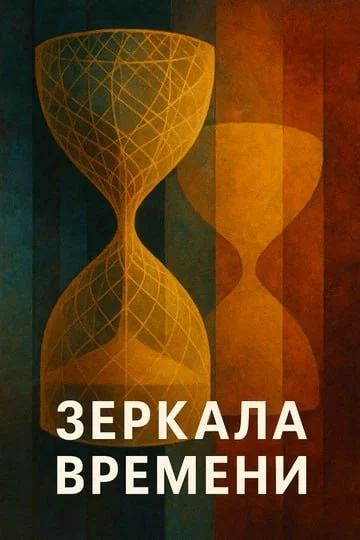
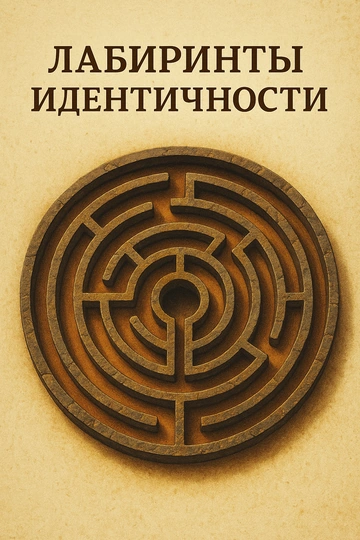


Across two decades of writing, Etibar Eyub has returned to three questions that refuse to become simpler with time.
Memory and what it holds together. For Etibar Eyub, memory is not nostalgia. It is a structural force — the mechanism by which individuals and communities stay coherent over time. When memory weakens, orientation weakens with it. His writing examines how economic pressure, political change, and digital technology quietly erode the conditions in which memory survives.
Identity under pressure. Growing up in post-Soviet Baku, Etibar Eyub observed firsthand how identity shifts when the surrounding system collapses. His work explores what happens to people — and to cultures — when old reference points disappear before new ones are established. This is not a local question. It is one that increasingly defines life across the modern world.
Technology as a condition, not a verdict. Etibar Eyub does not treat technology as an enemy or a solution. He treats it as an environment — one that changes how we perceive, remember, and relate to one another. His novel Networks of Oblivion and his current research on artificial intelligence and authorship both approach technology the same way: not with alarm, but with the patience required to actually understand it.
Etibar Eyub has been featured in cultural and intellectual publications across Europe and the post-Soviet space. His essays and interviews have appeared in platforms including The Calvert Journal and openDemocracy, where he has written on East-West dialogue, the politics of memory, and the cultural consequences of digital life.
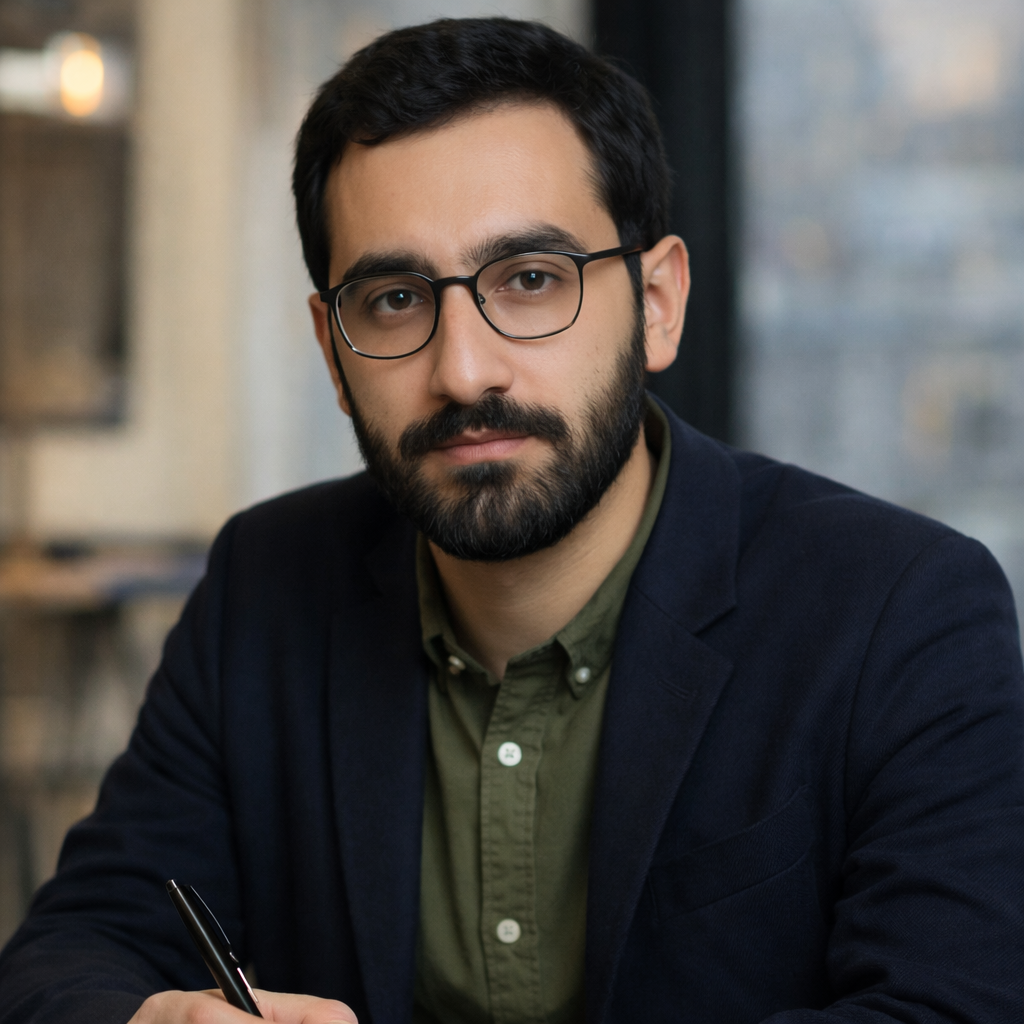
His work has been discussed at literary festivals in Baku, Berlin, Tbilisi, and Warsaw. He has participated in academic conferences on media theory, cultural identity, and the future of authorship in the age of artificial intelligence.
Journalists and editors looking to interview Etibar Eyub or commission essays are welcome to get in touch via the contact page. He speaks on topics including post-Soviet cultural identity, the ethics of memory, digital transformation, and the evolving role of the writer in contemporary society.

Etibar Eyub teaches cultural journalism — not as a technical discipline, but as a practice of thinking clearly about culture in public. His courses address how narratives are constructed, how meaning is shaped in media, and how writers can engage seriously with ideas without losing their audience.
He has worked with students in Baku and Berlin, and participates in educational initiatives aimed at audiences who rarely have access to serious intellectual conversation. For Etibar Eyub, teaching is not separate from writing. Both require the same things: clarity, patience, and genuine respect for the person on the other side.
Beyond formal teaching, he organizes lectures, supports reading programs for schoolchildren, and is involved in efforts to build school libraries and preserve oral histories of older generations. He approaches education the way he approaches his books — as a way of keeping the connections between generations alive.
Those interested in lectures, workshops, or academic collaboration are welcome to reach out directly.
Etibar Eyub is married to Leyla Eyub, an art historian specializing in contemporary Caucasian art. Their shared interest in culture, memory, and creative practice is not coincidental — it shapes the atmosphere of the household and the conversations that happen within it.
They have two children. Ali, born in 2014, is drawn to chess and comics — two forms that, in their own way, deal with strategy, narrative, and the logic of consequence. Narmin, born in 2018, gravitates toward music and drawing, toward expression that doesn't always need words.
Etibar Eyub has said that fatherhood changed the horizon of his writing. Questions that once felt abstract — what we pass on, what gets lost between generations, what responsibility looks like across time — became immediate and personal. Many of his texts on cultural continuity and intergenerational dialogue were written with his children in mind, not as an audience, but as a reason.
For him, family is not separate from intellectual life. It is where the ideas he writes about are most directly tested.
For speaking engagements, interviews and publication rights:
Social Programs
Promoting reading in regions: field lectures, book sets for schools, reading clubs for teenagers.
Collecting oral histories of the older generation: audio archive, exhibitions, open publications for students and researchers.
International dialogues about heritage and future, meetings of writers, translators, cultural experts.